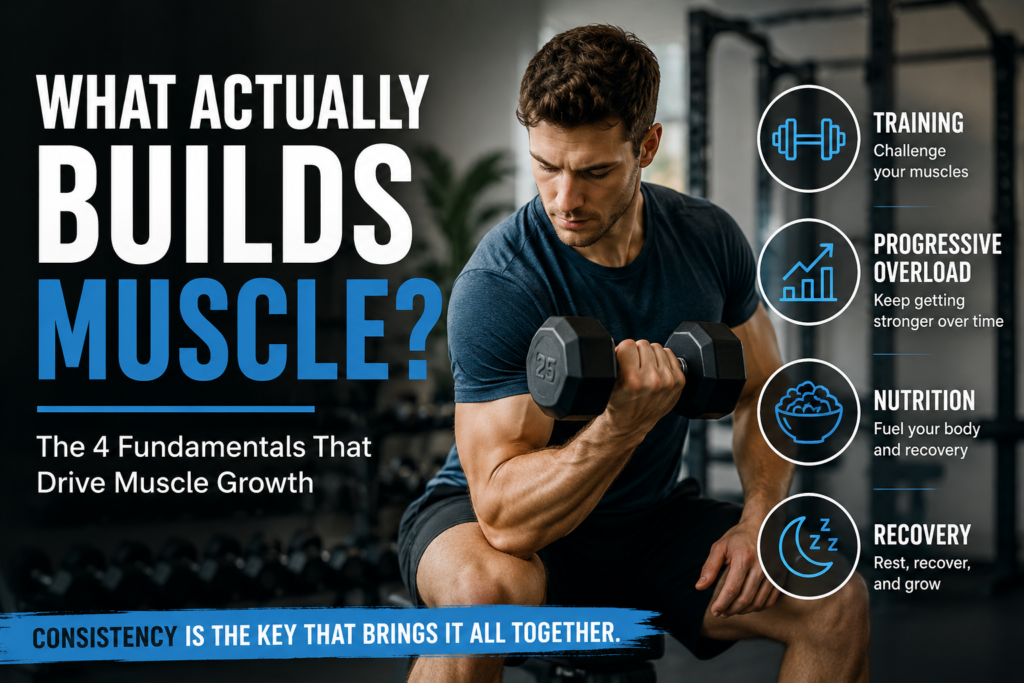
If your goal is to build muscle, focus on these four things:
Resistance training
Progressive overload
Adequate nutrition
Recovery and consistency
Everything else is secondary.
Your body doesn’t build muscle just because you want bigger arms or stronger legs. It builds muscle because it receives a reason to adapt.
Resistance training creates that reason.
Whether you’re using dumbbells, barbells, machines, resistance bands, or even bodyweight exercises, challenging your muscles tells your body that it needs to become stronger and larger to handle future demands.
Without consistent resistance training, muscle growth is limited because there is no stimulus for adaptation.
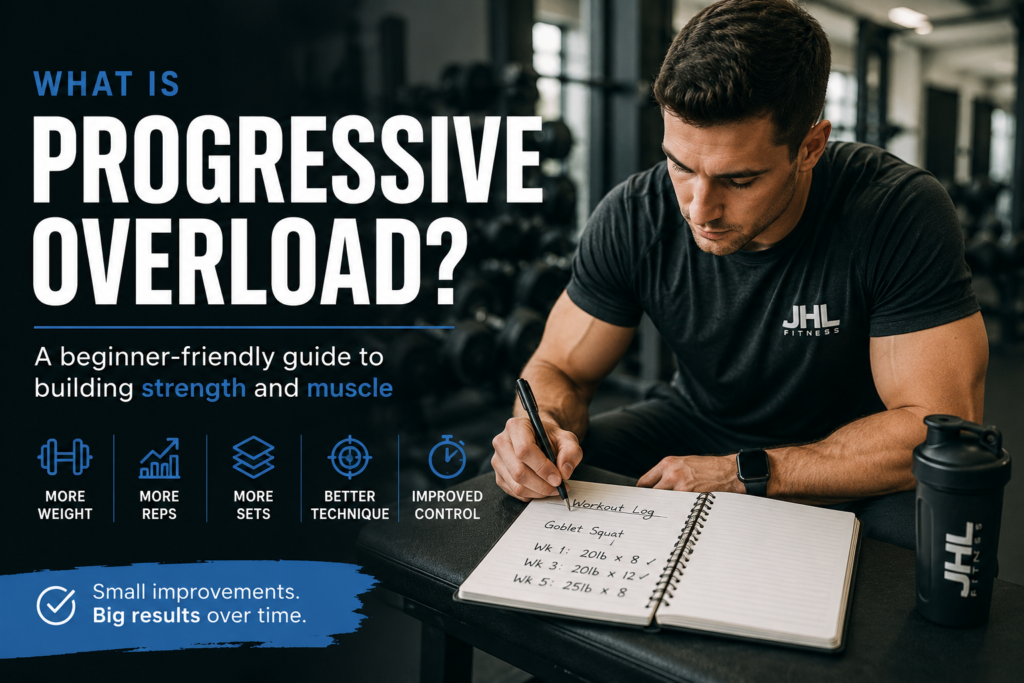
One of the most important concepts in fitness is progressive overload.
Simply put, your muscles need to be challenged over time. If you always lift the same weight for the same number of repetitions, your body eventually adapts and has little reason to continue growing.
Progressive overload can involve:
Adding weight
Performing more repetitions
Completing more sets
Improving exercise technique
The goal isn’t to set a personal record every workout. Small Improvements accumulated over weeks and months can produce significant results.
Think of training as the construction crew and nutrition as the building materials. Even the best workout program can’t maximize muscle growth if your body lacks the nutrients needed for recovery. Use our free Macro Calculator to find out exactly how much protein you need!
Protein is especially important because it supplies the amino acids required to repair and build muscle tissue. Current research suggests that consuming approximately 1.4–2.0 grams of protein per kilogram of body weight per day is sufficient for maximizing muscle growth in most individuals (Morton et al., 2018).
Calories matter as well. While beginners can often build muscle at maintenance calories, a small calorie surplus may make the process easier for some people.
Many people assume muscle growth occurs during a workout. In reality, training creates the stimulus, but recovery is when adaptation occurs.
Sleep, stress management, and rest days all play an important role in helping your body recover and grow.
Aim for 7–9 hours of sleep per night whenever possible and give muscle groups adequate time to recover between hard training sessions.
Remember, soreness is not a requirement for muscle growth. Consistent training and recovery matter far more than feeling exhausted after every workout.
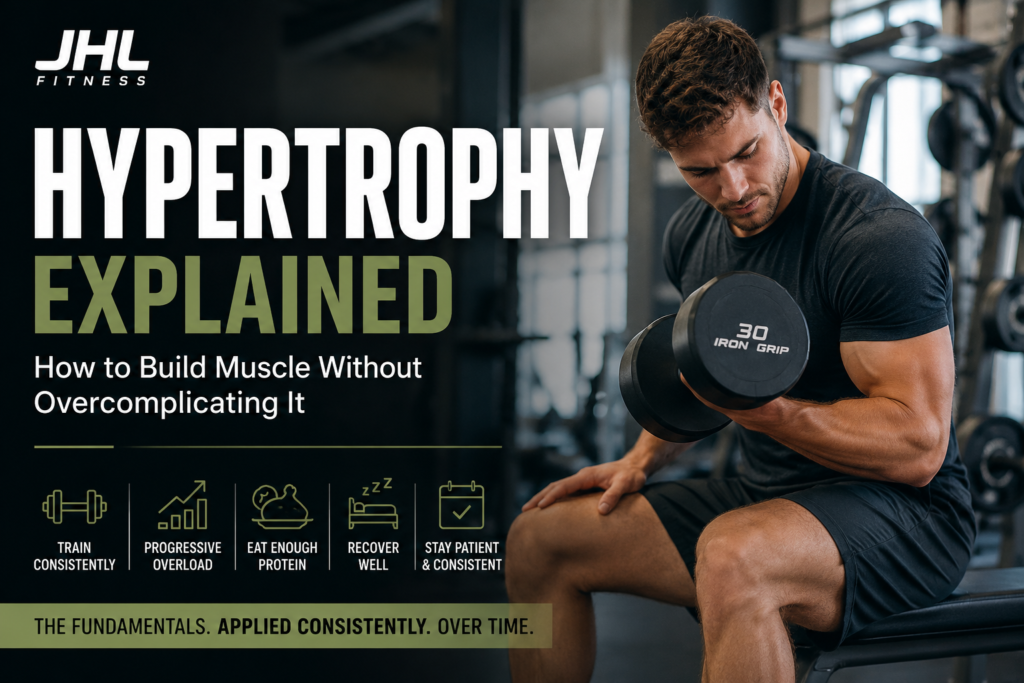
Most successful lifters spend years focusing on the same fundamentals:
Train consistently
Progress gradually
Eat enough protein
Recover well
The fitness industry often promotes shortcuts because they're exciting. The reality is that muscle growth comes from doing the basics well for a long time.
The good news? Those basics are available to everyone.
Online Coaching | Science Based Fitness and Nutrition