How Much Protein Do You Actually Need Everyday?

5/25/26

7 min

If you’ve spent any time on fitness TikTok or YouTube, you’ve probably heard wildly different opinions about protein. Some people act like you need multiple protein shakes a day just to make progress, while others claim protein doesn’t really matter at all.


The truth is somewhere in the middle.


Protein is important, especially if your goals include building muscle, improving recovery, or losing fat while maintaining muscle. But for most beginners, protein doesn’t need to be nearly as complicated as the internet makes it seem.

Quick Answer

For most active adults, a good target is roughly:
0.7-1.0 grams of protein per pound of body weight
Or about 1.6-2.2 grams per kilogram

That means: A 150-pound person may aim for around 105–150g daily A 200-pound person may aim for around 140–200g daily
You do not need to hit the perfect number every day. Consistency matters far more than perfection.

Why Protein Matters

Protein plays several important roles in the body, but in fitness, its biggest job is helping repair and build muscle tissue after training. Exercise creates the stimulus, while protein helps support the recovery process.


Protein can also:

Help you stay fuller longer
Support recovery from workouts
Help maintain muscle during fat loss
Improve overall body composition


This is especially important for busy people who may not have unlimited time to train. Getting enough protein can help maximize the results you get from the workouts you are able to do. Research consistently shows that higher protein intakes can support muscle growth and recovery in active individuals (Morton et al., 2018).

Do You Need Huge Amounts?

Probably not.


One of the biggest misconceptions online is that more protein automatically means more muscle. In reality, there’s a point of diminishing returns.


Most evidence suggests that around: 1.6−2.2 g/kg/day is enough for the majority of people focused on strength training or improving body composition (Jäger et al., 2017).


That doesn’t mean eating slightly more is harmful for healthy individuals, but it does mean you likely don’t need extreme amounts to see great progress.

Does Protein Timing Matter?

Yes — but not as much as people think.


The most important factor is your Total Daily Protein intake. Hitting your overall goal consistently matters more than trying to perfectly time every meal.


That said, spreading protein across your meals can help. For example:

Breakfast
Lunch
Dinner
One high-protein snack or shake


This approach is usually easier for recovery, satiety, and habit building.

And despite what social media may claim, there is no tiny “anabolic window” where your workout is wasted if you don’t drink a shake immediately afterward.

Practical Protein Tips

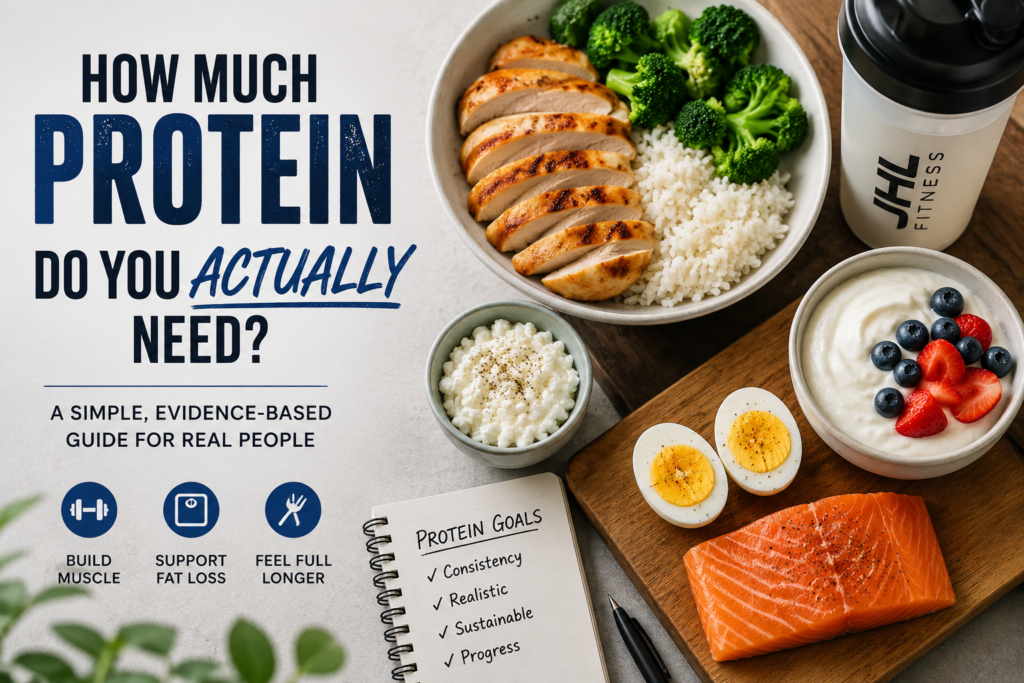
Protein doesn’t have to come from expensive supplements or perfectly clean meals. Some easy and realistic options include:

Greek yogurt
Eggs
Chicken
Ground turkey
Cottage cheese
Tuna
Tofu or edamame
Protein shakes for convenience

The best protein source is often the one you can consistently include in your routine.

Practical Takeaway:

Protein matters, but it shouldn’t become another stressful part of fitness.

For most beginners, focusing on consistent habits, balanced meals, and realistic daily targets will take you much further than obsessing over exact numbers.

If you need help simplifying your nutrition or figuring out a realistic protein target for your goals, the JHL Fitness Macro Calculator can be a great place to start.

Need help applying this to your lifestyle?

Citations