If you’ve spent any time in fitness spaces online, you’ve probably heard people talk about “tracking macros.” For beginners, that phrase can sound confusing, overwhelming, or overly complicated. The good news? Macros are much simpler than the internet makes them seem.
Macros — short for macronutrients — are simply the three main nutrients your body uses for energy and function: protein, carbohydrates, and fats. Every food you eat contains some combination of these nutrients, and understanding them can help make nutrition feel more flexible and less restrictive.
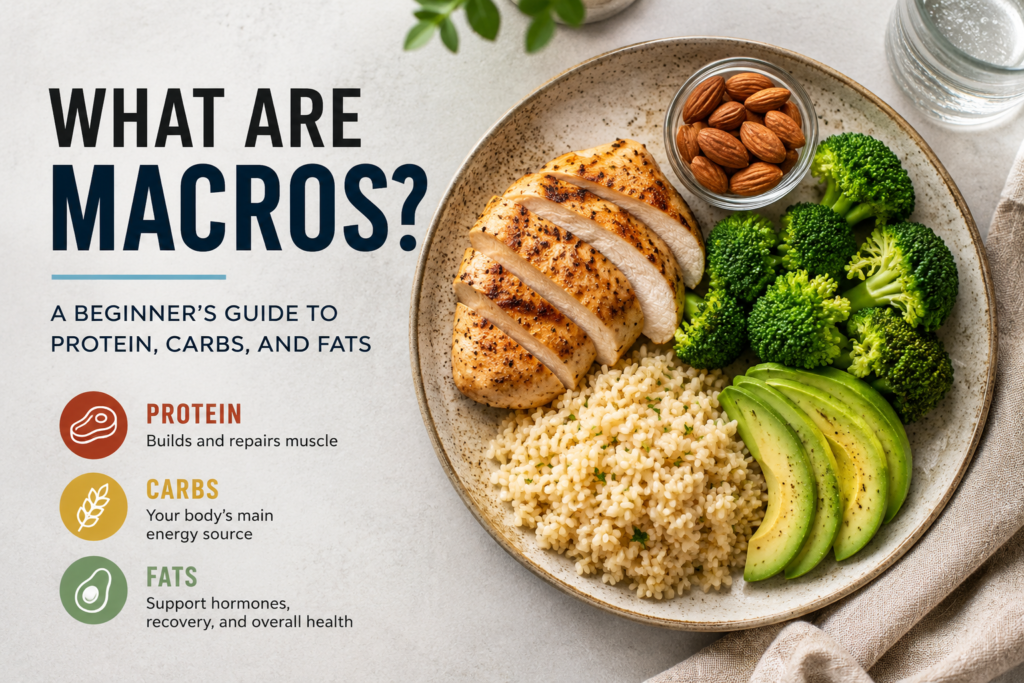
Macros are:
Protein helps build and repair muscle
Carbohydrate your body’s main energy source
Fat support hormones, recovery, and overall health
Calories come from these three nutrients, and different foods contain different amounts of each. You don’t need to obsessively track every gram to benefit from understanding them.
Protein
Protein is most known for helping build and repair muscle, but it also plays a role in recovery, fullness, and overall health. This is why protein is important even if your goal isn’t bodybuilding.
Common protein sources include:
chicken
eggs
Greek yogurt
tofu
protein shakes
For many beginners, simply increasing protein intake is one of the easiest ways to improve nutrition. Find out how much protein you need per day to maximize your results.
Carbohydrates
Carbs often get unfairly labeled as “bad,” but they are your body’s preferred fuel source. They help support workouts, recovery, daily energy, and performance.
Common carb sources include:
rice
oats
fruit
potatoes
bread
Most people feel and perform better when they include carbohydrates consistently rather than avoiding them completely.
Fat
Dietary fats support hormone production, brain function, joint health, and overall recovery. Healthy fats are an important part of a balanced diet.
Common fat sources include:
avocado
nuts
olive oil
salmon
egg yolks
Like carbs, fats are not something you need to fear.
Each macro contains calories:
Protein = 4 calories per gram
Carbs = 4 calories per gram
Fat = 9 calories per gram
Calories largely determine weight change, but macros influence how full you feel, how well you recover, and how your body performs. See how calories effect fat loss and how you can achieve it sustainably.
For example, two meals might contain the same number of calories, but a meal with balanced protein, carbs, and fats will often keep you fuller and more energized than a meal made mostly of highly processed foods.
Not necessarily.
Macro tracking can be a useful learning tool because it helps people become more aware of what they’re eating. However, it’s not required for progress.
Many beginners see great results simply by:
prioritizing protein
eating more balanced meals
including fruits and vegetables consistently
improving portion awareness
Tracking macros should be viewed as a tool, not a requirement. Some people enjoy detailed tracking, while others prefer a simpler, more intuitive approach long term.
Macros are not a “diet.” They’re simply a way to better understand nutrition and build meals that support your goals.
You do not need perfect macro targets, expensive meal plans, or extreme restriction to make progress. In most cases, consistency and sustainability matter far more than perfection.
If you want help figuring out your own nutrition targets, our free macro calculator can help you get started with a simple, beginner-friendly estimate. And if nutrition still feels overwhelming, coaching can help simplify the process and fit it into your real life.
Online Coaching | Science Based Fitness and Nutrition