If you’ve ever searched for fitness advice online, you’ve probably seen dozens of different answers to the question: “How many sets and reps should I do?” One person says 3 sets of 10 is the magic formula. Another says you need heavy weight and low reps. Someone else claims high reps are best for fat loss.
It’s easy to feel overwhelmed.
The good news is that most beginners don’t need a complicated program. Understanding a few basic principles can help you build muscle, get stronger, and make progress without overthinking every workout.
For most beginners, a great starting point is:
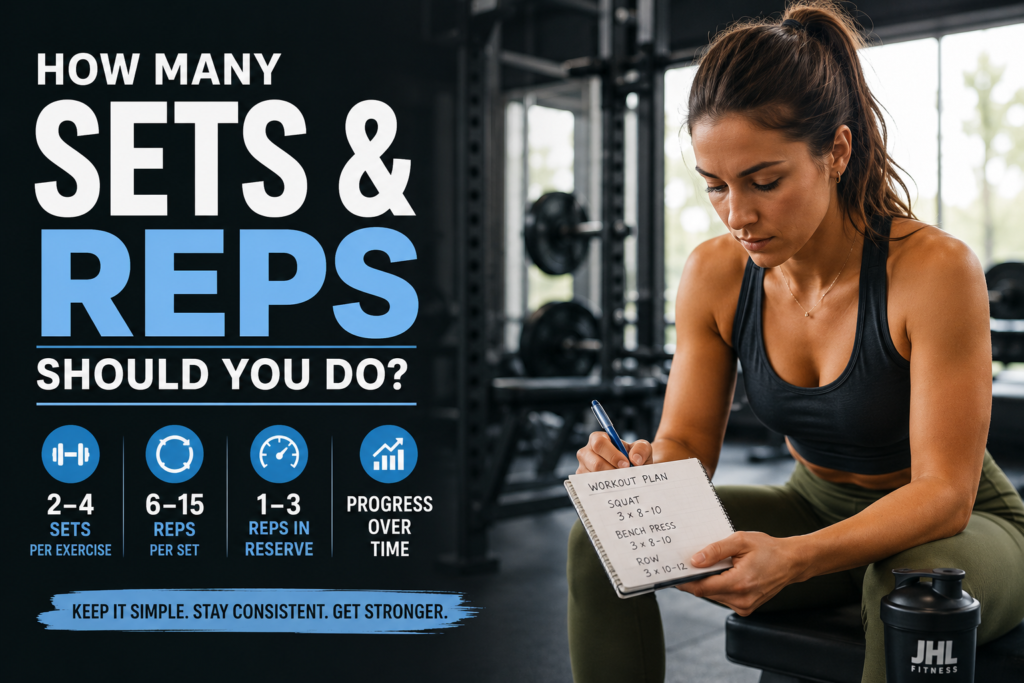
2–4 sets per exercise
6–15 reps per set
Stop most sets with 1–3 reps left in the tank.
Focus on improving over time.
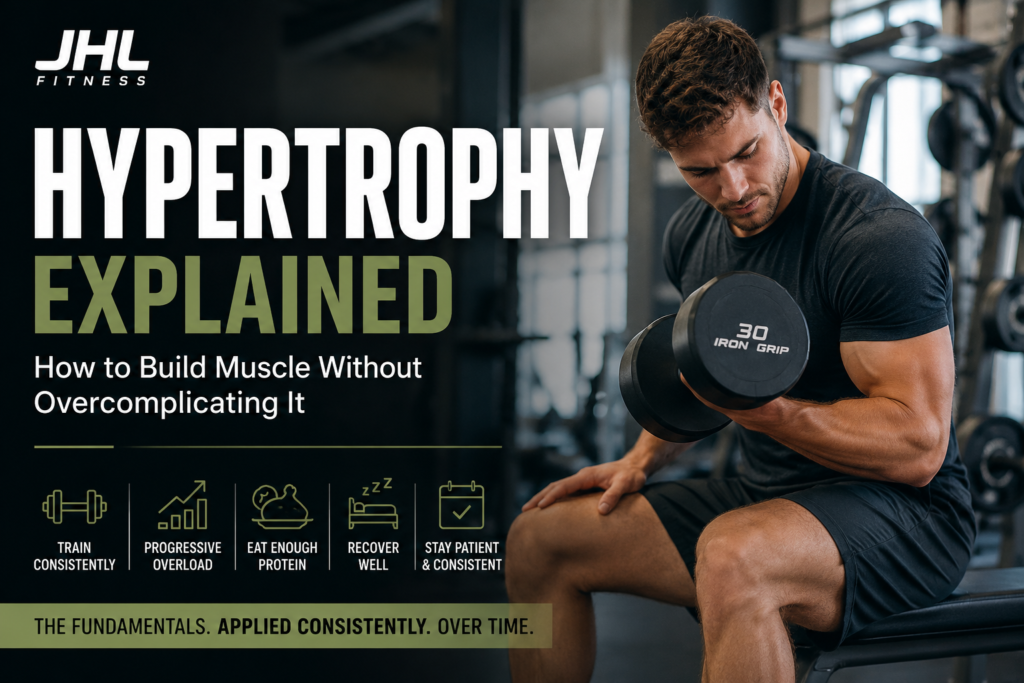
The exact number of reps matters less than training consistently and gradually challenging your muscles.
A Rep (Repitition) is one complete movement of an exercise. For example, one squat equals one rep.
A Set is a group of reps performed before resting. If you perform 10 squats, rest, and repeat two more times, you’ve completed 3 sets of 10 reps.
Workout programs use sets and reps to help organize training volume and intensity.
Yes—but probably not as much as you think.
Lower rep ranges (1–5 reps) are typically used to develop maximal strength. Moderate rep ranges (6–12 reps) have traditionally been associated with muscle growth, while higher rep ranges (12–20+ reps) can improve muscular endurance.
However, research shows that muscle growth can occur across a wide range of rep ranges as long as the sets are performed with sufficient effort (Morton et al., 2016; Schoenfeld et al., 2017).
For most beginners, staying within the 6-15 rep range is a practical and effective approach.
More isn’t always better.
Beginners can make excellent progress with 2-4 challenging sets per exercise. In fact, many people get better results from doing fewer high-quality sets consistently than from performing endless volume that leaves them exhausted.
As you gain experience, you may gradually increase training volume, but consistency should always come first.
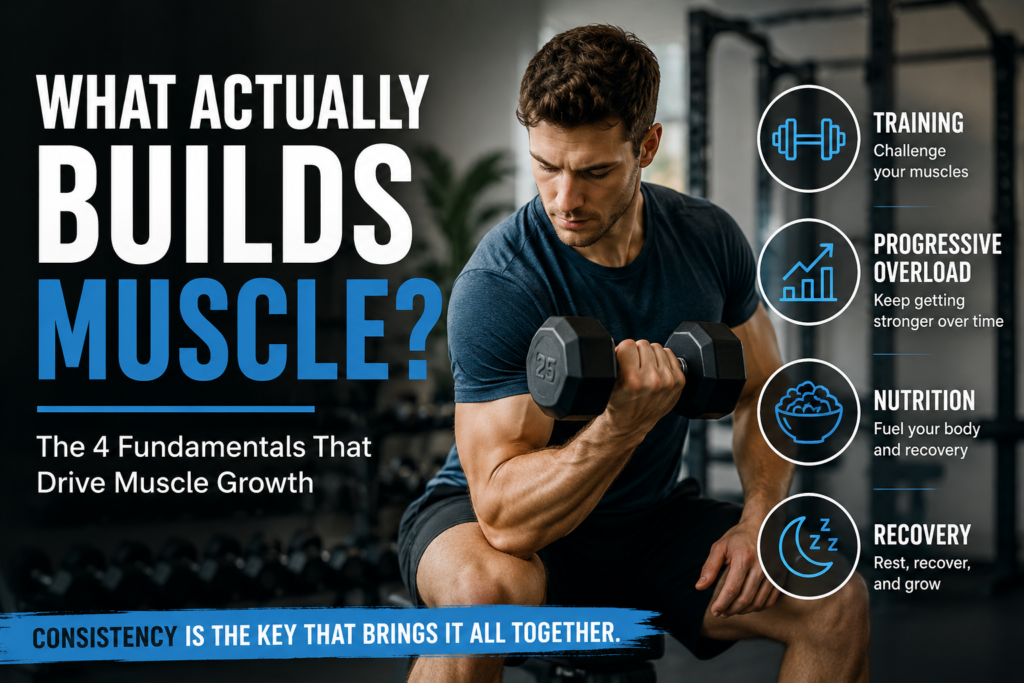
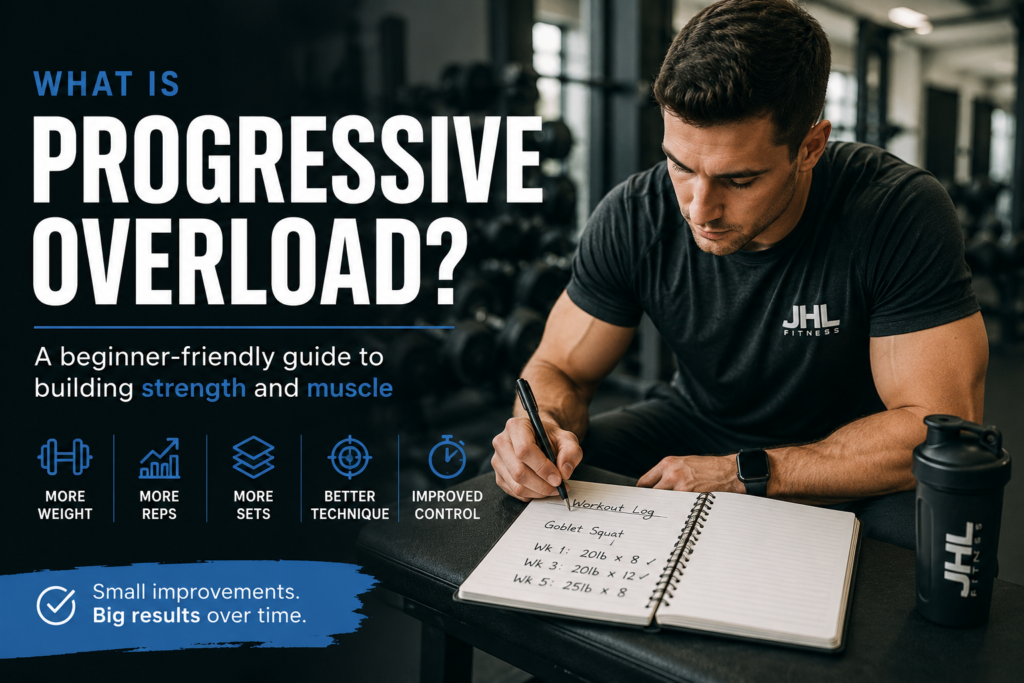
The biggest driver of long-term progress isn’t a specific set or rep scheme—it’s progressive overload.
Progressive overload means gradually increasing the challenge placed on your muscles over time. This could mean:
Adding weight
Performing more reps
Improving technique
Completing more quality work
If you’re getting stronger and performing better over time, you’re moving in the right direction.
If you're a beginner, don't get stuck searching for the perfect rep range. Start with: 2–4 sets per exercise 6–15 reps for most movements Consistent training each week A focus on gradual progress The best workout program isn't the one with the perfect sets and reps. It's the one you can stick with long enough to see results. Need help creating a workout plan that fits your schedule and goals? JHL Fitness helps busy professionals simplify training and nutrition so they can build sustainable results without spending hours in the gym.
Online Coaching | Science Based Fitness and Nutrition