Nutrition can feel incredibly confusing when you first start trying to eat healthier. One person says carbs are bad, another says meal timing is everything, and someone else is telling you to buy five supplements before you even step into a gym.
The truth is, most beginners do not need a perfect diet. They need a Simple, Sustainable Foundation they can actually follow Consistently.
Good nutrition should support your life, not completely take it over. If you focus on a few key habits and stick with them over time, you can make meaningful progress without obsessing over every detail.
If nutrition feels overwhelming,
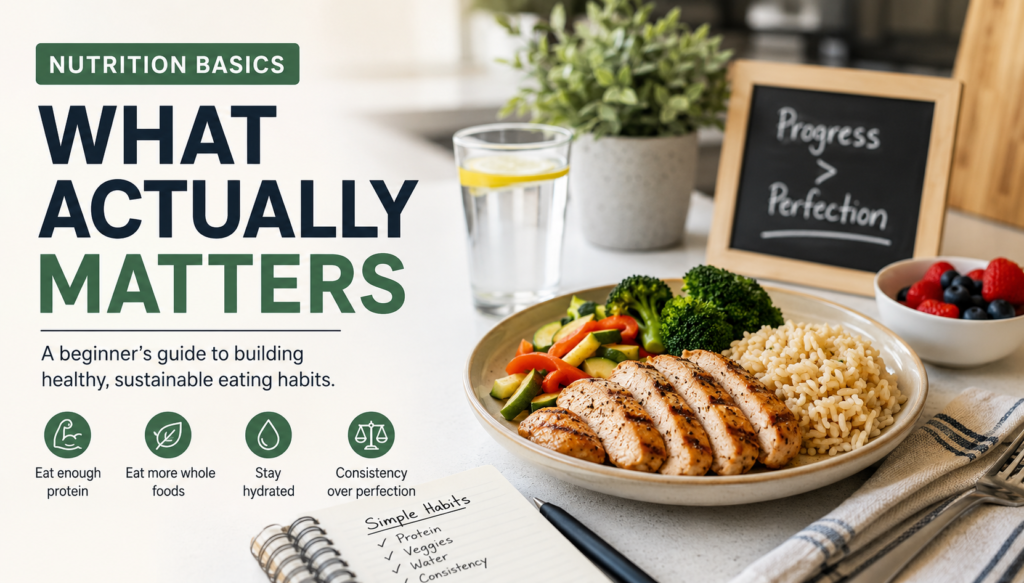
Start Here:
Eat enough protein
Include fruits and vegetables daily
Build most meals around whole foods
Stay hydrated
Be mindful of portion sizes and total calorie intake
Focus on consistency instead of perfection
You do not need to eat perfectly to make progress.
At its core, nutrition comes down to Energy Balance. Calories are simply a measure of energy from food.
If you consistently eat more calories than your body needs, you will generally gain weight. If you consistently eat fewer calories than your body needs, you will generally lose weight. This concept is often called a Calorie Surplus or Calorie Deficit.
That said, nutrition is not only about calories. Food quality matters for energy levels, performance, recovery, fullness, and overall health. Eating 2,000 calories of mostly whole foods will usually leave you feeling very different compared to 2,000 calories of heavily processed foods.
The goal is not to obsessively track every calorie forever. For many beginners, simply becoming more aware of portions, snacking habits, and liquid calories can already make a huge difference.
If you want a more personalized starting point, this is also where a macro calculator can be helpful.
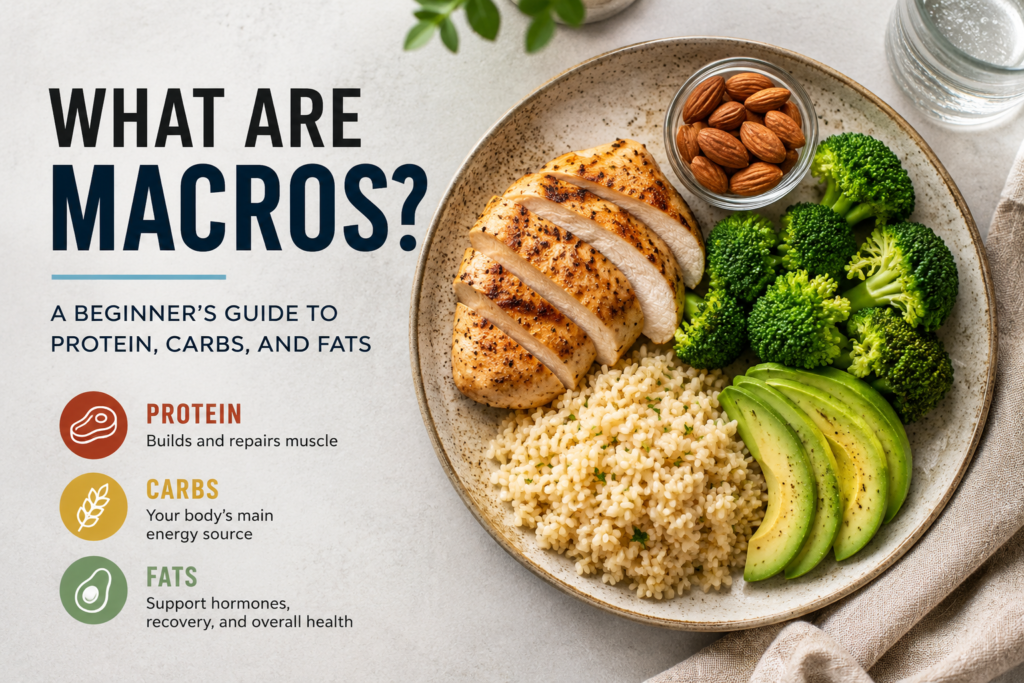
The three main macronutrients are protein, carbohydrates, and fats. Each one plays an important role.
Protein
Protein helps repair and build muscle while also helping you stay fuller for longer. Research consistently shows that higher protein intake can support body composition and recovery, especially for active individuals (Jäger et al., 2017).
Good protein sources include:
Chicken
Greek yogurt
Eggs
Fish
Tofu
Protein shakes
Carbohydrates
Carbs are your body’s preferred energy source, especially during exercise. Despite what social media sometimes says, carbs are not inherently bad. Foods like rice, potatoes, oats, fruit, and whole grains can all be part of a healthy diet.
Fats
Healthy fats support hormones, brain function, and overall health. Foods like avocados, nuts, olive oil, and salmon are great options.
A balanced meal does not need to be complicated. Something as simple as chicken, rice, and vegetables already covers most basics.
For a deeper dive into Macro Nutrients, check out this breakdown.
Whole foods are generally more filling, nutrient dense, and supportive of long-term health. Fruits, vegetables, lean proteins, whole grains, and minimally processed foods should make up the majority of your diet when possible.
However, that does not mean you can never eat processed foods.
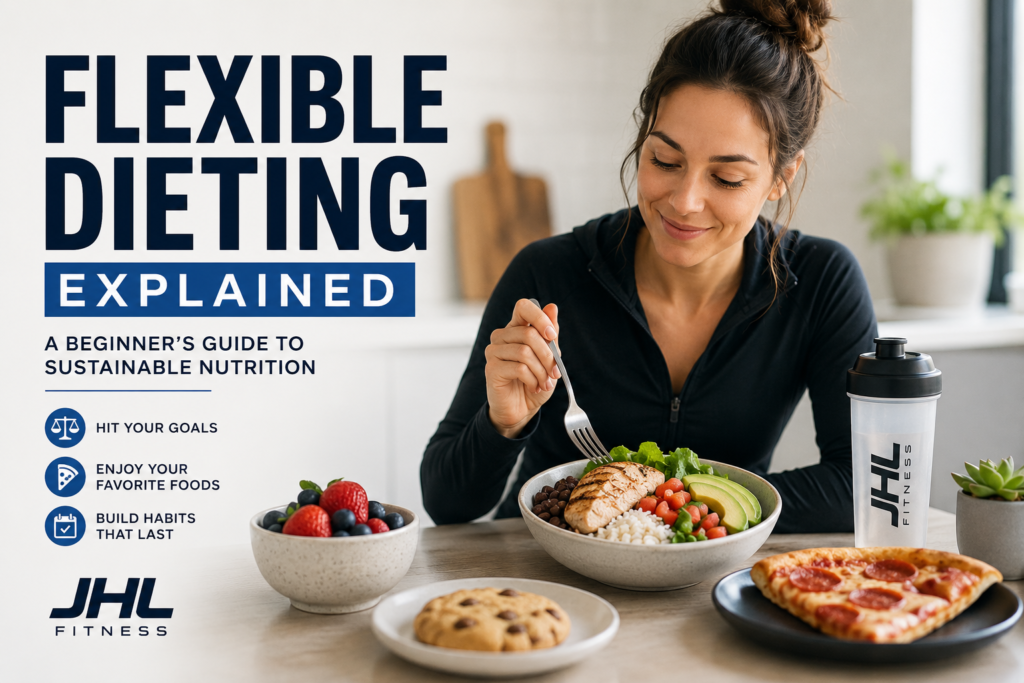
One of the biggest mistakes beginners make is thinking nutrition has to be all-of-nothing. In reality, sustainable nutrition usually includes flexibility. You can enjoy dessert, eat at restaurants, or have convenience foods without ruining your progress.
A realistic approach is often more effective than a “perfect” diet you cannot maintain.
For many people, aiming for an 80/20 balance works well:
Most meals focus on nutritious foods
Some meals include foods you simply enjoy
That balance helps nutrition feel sustainable instead of restrictive.
One of the easiest ways to simplify nutrition is to build meals around a basic structure:
A protein source
A carbohydrate source
Fruits or vegetables
A healthy fat source
For example:
Breakfast: eggs, toast, and fruit
Lunch: chicken, rice, and vegetables
Dinner: salmon, potatoes, and salad
You do not need fancy recipes or expensive ingredients. Frozen vegetables, meal prep shortcuts, and simple meals are completely fine. Especially for busy professionals, consistency with simple meals will almost always beat complicated nutrition plans that are difficult to follow.
Your progress is shaped more by your habits over months and years than by any single meal.
One unhealthy meal does not ruin your results. Just like one healthy meal does not instantly transform your health. The people who succeed long term are usually not the ones with the “perfect” diet. They are the ones who build realistic habits they can stick to consistently.
Focus on improving gradually:
Add more protein
Drink more water
Eat more fruits and vegetables
Reduce all-or-nothing thinking
Sustainable nutrition should fit into your real life — including busy schedules, social events, and stressful weeks.
If you are just getting started, focus on these five habits first:
Include protein in most meals
Drink more water consistently
Eat fruits or vegetables daily
Build most meals around minimally processed foods
Stop aiming for perfection
You do not need to master every nutrition detail overnight. Small improvements repeated consistently can lead to meaningful long-term progress.
If you want help simplifying your nutrition around your schedule and goals, tools like a macro calculator or personalized coaching can help make the process feel more manageable.
Online Coaching | Science Based Fitness and Nutrition