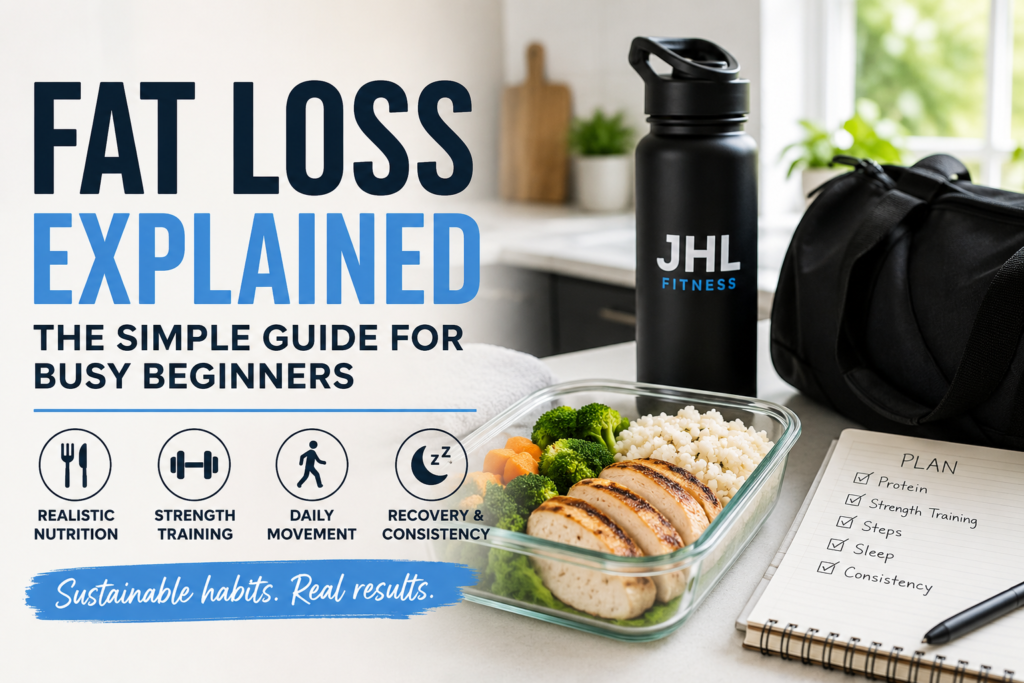
Fat Loss
explained

The Simple Guide Fat Loss for Busy Beginners

Published date

Estimated read time

If you’ve ever tried to lose fat before, chances are you’ve run into a lot of conflicting advice. One person says carbs are the problem. Another says you need to fast. Someone else tells you to spend hours doing cardio. For beginners especially, fat loss can quickly start feeling confusing, overwhelming, and unsustainable. The reality is that fat loss is much simpler than the internet makes it sound. You do not need a perfect diet, detox teas, or an “all or nothing” mindset to make progress. Most people see better long-term results when they focus on consistency, realistic habits, and a plan they can actually maintain.

Quick Answer:

Fat loss happens when your body consistently burns more calories than it consumes. This is called a calorie deficit. That doesn’t mean you need to starve yourself or cut out all your favorite foods. Sustainable fat loss usually comes from: Eating enough protein Strength training consistently Staying active throughout the day Prioritizing sleep and recovery Building habits you can realistically maintain

What Fat Loss Actually Is

At its core, fat loss is your body using stored energy for fuel. When you consistently consume fewer calories than you burn, your body begins pulling from stored fuel reserves — including body fat. One important thing to remember is that body weight naturally fluctuates from day to day. Water retention, sodium intake, stress, sleep, and digestion can all temporarily affect the scale. That’s why it’s more helpful to focus on long-term trends rather than obsessing over daily changes.

Why Most Diets Fail

Many fat loss plans fail because they rely on extreme restrictions. Cutting out entire food groups, doing excessive cardio, or trying to “eat perfectly” usually creates a cycle that’s difficult to sustain. A common mistake is relying entirely on motivation. Motivation comes and goes, especially when life gets busy. Sustainable results are usually built through systems and habits instead. Another issue is the all-or-nothing mindset. Many people feel like one “bad” meal ruins their progress, which often leads to giving up entirely. In reality, long term consistency matters far more than occasional imperfect days.

The Biggest Drivers of Sustainable Fat Loss

Nutrition You don’t need a perfect diet, but prioritizing protein and eating mostly whole foods can make a huge difference. Protein helps with fullness, muscle retention, and recovery during fat loss. Research has consistently shown higher protein diets can improve satiety and support body composition goals. Strength Training Strength training helps preserve muscle while losing fat, which improves overall body composition. You also don’t need to train six days a week. Even 2–4 quality sessions per week can be effective for many beginners. Daily Movement Walking, taking the stairs, and simply moving more throughout the day can significantly impact calorie expenditure. Small increases in daily activity add up over time. Recovery Poor sleep and high stress can make fat loss harder by increasing hunger and reducing energy levels. Recovery is often overlooked, but it matters.

What Realistic Fat Loss Looks Like

Healthy fat loss is usually slower than people expect. For many individuals, losing around 0.5–1 pound per week is realistic and sustainable. The goal shouldn’t be to lose weight as fast as possible. The goal should be building habits you can maintain long after the initial motivation fades.

Practical Takeaway:

If you want to start improving your fat loss results, focus on a few simple habits: Prioritize protein at most meals Strength train consistently Walk more daily Sleep better when possible Stop aiming for perfection Small habits repeated consistently tend to produce better results than extreme short-term diets. If you want help simplifying your nutrition and building a realistic plan around your schedule, JHL Fitness coaching focuses on sustainable habits designed for busy people. You can also start with the free macro calculator to get a realistic estimate tailored to your goals.

Need help applying this to your lifestyle?

Citations

Articles like this