
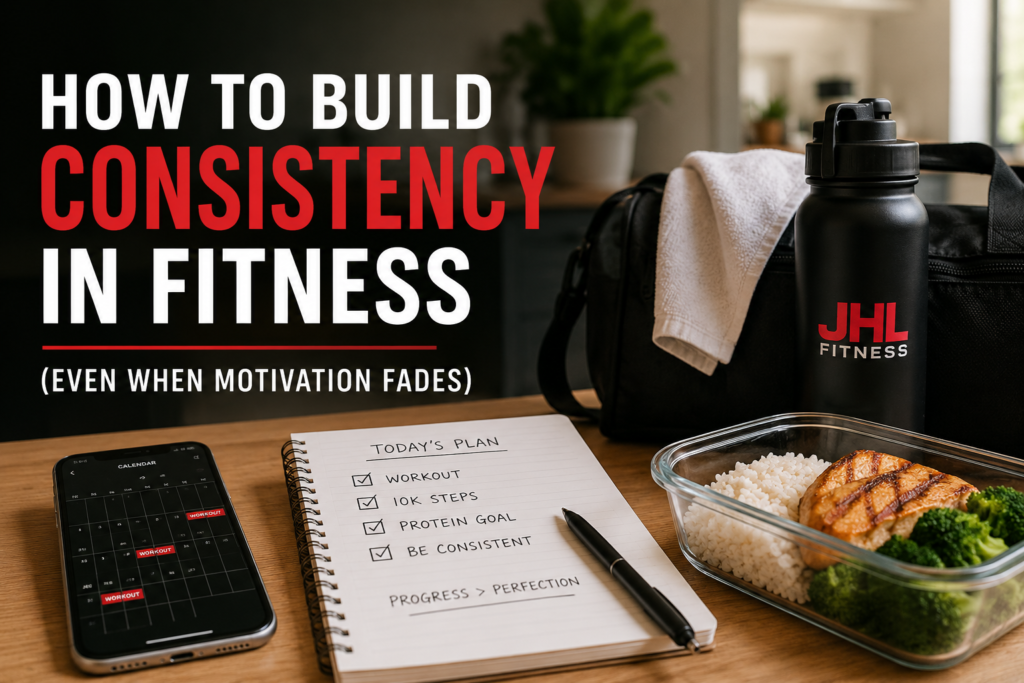
One of the biggest misconceptions in fitness is that successful people are always motivated. In reality, most long-term progress comes from showing up consistently — even on days when motivation is low.
A lot of beginners struggle because they think they need to completely change their lives overnight. Social media often promotes extreme routines, strict diets, and “all-in” mentalities that simply aren’t realistic for most busy people. The problem is that extreme plans are usually difficult to maintain long term.
Sustainable fitness is usually much less dramatic. It’s built through small habits repeated consistently over tim
Consistency in fitness doesn’t come from being motivated all the time. It comes from building routines that realistically fit your life. Starting small, planning around your actual schedule, and focusing on repeatable habits will almost always work better than trying to be perfect for a few weeks.
One of the biggest reasons people struggle with consistency is that they try to do too much too quickly.
Going from no workouts to training six days per week, cutting out all “junk food,” tracking every calorie, and waking up at 5 a.m. might sound productive, but it often leads to burnout. Research shows that behavior changes are more sustainable when they feel manageable and realistic (Lally et al., 2010).
Consistency is not about being perfect. It’s about creating habits you can repeat during both good weeks and stressful ones.
Instead of asking:
“What’s the fastest plan?”
A better question is:
“What can I realistically maintain for the next six months?”
That mindset shift alone can make a huge difference.
A good fitness plan should almost feel too easy at first.
That might mean:
Working out 2–3 days per week
Going for a 10-minute walk after dinner
Adding protein to one meal per day
Drinking more water consistently
Small habits may not feel impressive, but they build momentum. Early wins increase confidence and help reinforce long-term behavior change (Bandura, 1997). Many people underestimate how powerful consistency can be. A moderate routine followed consistently for a year will usually outperform an intense routine that only lasts three weeks.
If you’re constantly “starting over,” the answer is often to simplify the plan — not to push harder.
One of the most common mistakes beginners make is building routines around their ideal schedule instead of their real one.
Real life includes:
Busy workdays
Low-energy evenings
Social events
Stress
Unexpected interruptions
Your fitness routine should be flexible enough to survive those things.
That might mean:
Doing shorter workouts during busy weeks
Having quick backup meal options
Walking when you can’t make it to the gym
Accepting that “good enough” still counts
Missing one workout does not ruin progress. One higher-calorie meal does not erase results. Long-term fitness is about averages over time, not perfection. Research on exercise adherence consistently shows that flexible, enjoyable routines are easier to maintain than highly restrictive ones (Teixeira et al., 2012).
This week, try focusing on just one small habit:
Walk 10 minutes after work
Train twice this week
Eat protein at breakfast
Go to bed 30 minutes earlier
Keep it simple and repeatable.
Fitness success usually doesn’t come from one massive burst of motivation. It comes from small actions repeated consistently over time.
If you need help building a realistic fitness or nutrition plan around your schedule, tools like a macro calculator or beginner-friendly coaching support can help simplify the process without making fitness feel overwhelming.
Online Coaching | Science Based Fitness and Nutrition